Ontario Graduated Licensing Explained: G1 to G2 to G
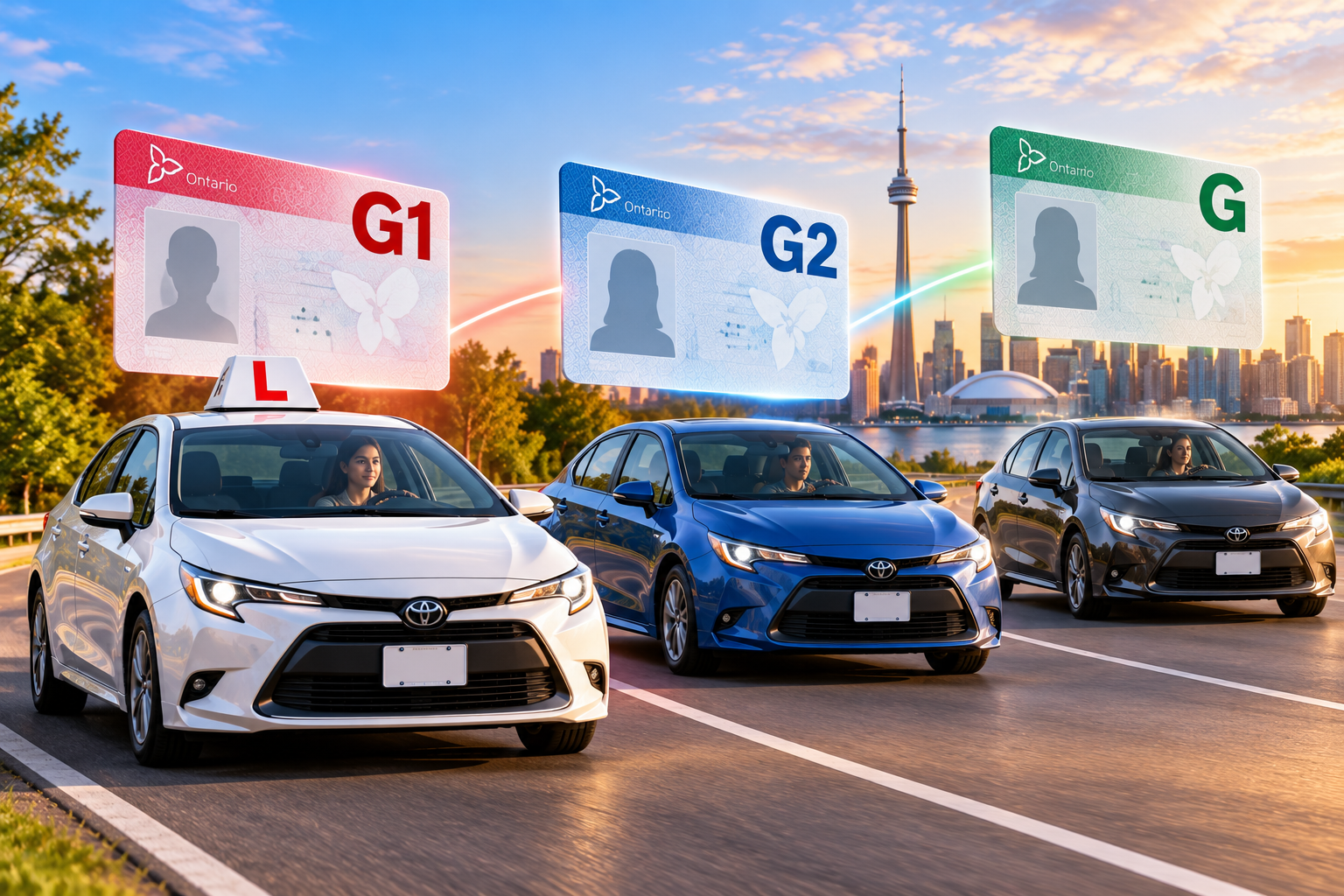
Ontario does not hand new drivers a full licence on day one. Instead it uses a graduated licensing system three stages, each with its own test, its own waiting period and its own set of restrictions.
If you are starting out, or you are a parent trying to work out what your teenager is actually allowed to do, this page explains the whole journey in one place: what each stage means, how long it takes, and what the rules are at every level.
What Is a Ontario Graduated Licensing
A graduated licence is one you earn in steps rather than all at once. You start with limited privileges, prove your skills with a road test, gain more freedom, then prove yourself again before you get a full licence.
The idea behind a graduated drivers licence is straightforward: new drivers crash more often, and most of those crashes happen in specific conditions at night, with a car full of friends, at high speed. So the system restricts exactly those conditions until a driver has experience behind them.
Most Canadian provinces use some form of graduated licensing. The Ontario graduated licensing system has three stages: G1, G2 and full G.
Ontario uses the spelling licence for the document and license for the verb. You will see “graduated drivers license” and “graduated driver license” used online as well they all refer to the same system.
The Three Stages at a Glance
| Stage | How you get it | What it allows |
| G1 | Vision test + knowledge test | Supervised driving only, with restrictions |
| G2 | G2 road test | Driving alone, with some restrictions |
| Full G | G road test | Full driving privileges |
Stage 1: The G1 Licence
Your G1 is where everyone starts. To get one you must be at least 16, be an Ontario resident, pass a vision test and pass a knowledge test on road rules and traffic signs.
A G1 does not let you drive by yourself. You must have a fully licensed driver with at least four years of driving experience beside you, and that person must be the only other occupant of the front seat.
That is the short version. For what the knowledge test actually covers and how to prepare for it, see our complete G1 test study guide
Stage 2: The G2 Licence
Once you pass the G2 road test, you can drive on your own. This is the biggest single jump in the system — no supervising driver, and you may use 400-series highways.
A G2 is not a full licence, though. Zero blood alcohol still applies, and if you are 19 or under there are limits on how many young passengers you can carry late at night.
For what the G2 road test involves and how to prepare, see our G2 road test guide
Stage 3: The Full G Licence
The G road test is the final step. It is longer than the G2 test and includes highway driving, because it is assessing whether you can handle every kind of road on your own.
Pass it and the graduated licensing restrictions come off.
For how to prepare for the final test, see our G road test guide
How Long Does the Whole Process Take?
This is the question most people actually want answered. Here is the full timeline, assuming you pass each test the first time.
| Step | Waiting period | Notes |
| Get your G1 | — | Vision test and knowledge test |
| G1 → G2 road test | 12 months | Reduced to 8 months with an approved driver education course |
| G2 → G road test | 12 months | No way to shorten this one |
| Total (standard) | 24 months minimum | Two years of holding a licence before your G |
| Total (with driver ed) | 20 months minimum | Four months saved at the first stage |
The four months saved by driver education come off the first wait only. There is no equivalent shortcut between G2 and full G that 12 months is fixed.
These are minimums, not schedules. They assume you pass each road test on the first attempt and can book a test when you want one.
Restrictions at Each Stage, Side by Side
This is where the system does its real work. Each stage lifts specific restrictions rather than all of them at once.
| Rule | G1 | G2 | Full G |
| Blood alcohol | Zero | Zero | Standard limits — but see the note below |
| Can you drive alone? | No | Yes | Yes |
| Supervising driver | Required — fully licensed, 4+ years experience | Not required | Not required |
| 400-series highways | Not permitted | Permitted | Permitted |
| Driving midnight–5 a.m. | Not permitted | Permitted, with passenger limits if you are 19 or under | Permitted |
| Passengers | Every passenger in a working seatbelt | Only as many passengers as working seatbelts | Only as many passengers as working seatbelts |
A full G licence does not always mean no alcohol limit. In Ontario, drivers 21 and under must have no alcohol and no drugs in their system when they drive — regardless of licence class. So a 19-year-old with a full G licence is still under zero tolerance by age.
The G1 supervising driver rule in detail
The person sitting beside a G1 driver is not just any licensed adult. They must:
- Hold a full licence with at least four years of driving experience
- Have a blood alcohol level of less than .05 — and zero if they are 21 or under
- Be the only other person in the front seat
There is one exception to the highway restriction worth knowing: a G1 driver may drive on 400-series highways when accompanied by an Ontario-certified driving instructor, which is how G1 students get supervised highway practice.
The G2 passenger rule in detail
If you hold a G2 and you are 19 or under, there are limits between midnight and 5 a.m.:
- First six months with your G2: you may carry only one passenger who is 19 or under
- After six months: that rises to three passengers aged 19 or under
Two exemptions apply. The limit does not apply if a fully licensed driver with four or more years of experience is in the car, or if the passengers are immediate family members.
Outside those hours, and for G2 drivers over 19, the ordinary seatbelt rule is the only passenger limit.
The Five-Year Rule
This is the part of the system people most often do not know about.
You must complete the graduated licensing process within five years. If you do not have your full G licence by then, you have to start over.
Five years sounds generous, and for most people it is. But the minimum path is already two years, and the clock does not care why you were delayed — a gap in practice, a failed test, a year away from driving, a licence left in a drawer. Students who take a long break after getting their G2 are the ones who get caught.
If you are already holding a G2 and the years are adding up, work backwards from your G1 date rather than assuming you have time.
How Driver Education Changes the Timeline
Completing a government-approved Beginner Driver Education (BDE) course lets you take your first road test after eight months instead of twelve.
That benefit only comes from an approved course. A package of private lessons, however good, does not shorten the wait only a course from a school on the ministry’s approved list does.
An approved course is 40 hours in total: 20 hours of classroom instruction, 10 hours of in-vehicle training with a licensed instructor, and 10 hours of flexible instruction time. We break the whole thing down in what is a BDE course in Ontario, and explain the classroom formats in online vs in-car driver training.
Before you enrol anywhere, check the school appears on the ministry’s list of approved driving schools. Only approved schools can certify you, and only certification shortens the wait.
What Happens If You Fail a Road Test?
Failing does not reset your graduated licensing progress. You keep the licence level you already hold and book another attempt.
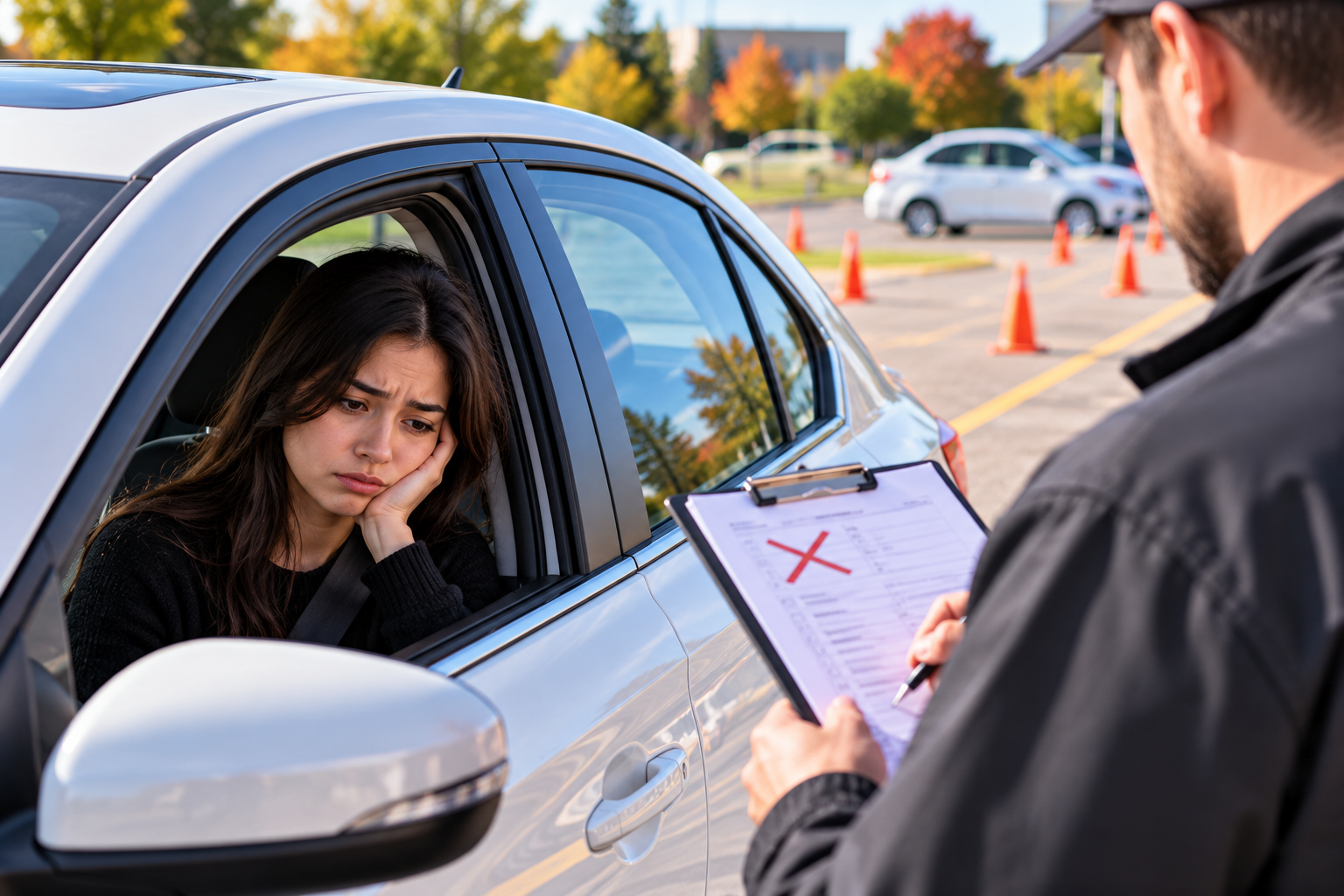
There is a required gap between attempts, and the five-year clock keeps running, so a string of failed attempts is worth taking seriously but one failed test is a delay, not a restart.
Conclusion
Go Drive Driving School is MTO approved and trains new drivers through every stage of Ontario’s graduated licensing system from first lessons on a G1 through to full G preparation across Barrie, Innisfil, Bradford, Midhurst, Springwater, Orillia, Alliston, Cookstown and Angus. See our programs and fees or contact us at 705-717-0406.
FAQs
What is a graduated licence?
A licence you earn in stages rather than all at once. Ontario uses three: G1, G2 and full G, each with its own test and restrictions.
How does graduated licensing work in Ontario?
You pass a vision and knowledge test for your G1, drive supervised for 12 months (or 8 with an approved course), pass the G2 road test, drive with some restrictions for 12 months, then pass the G road test for your full licence.
How long does it take to get a full G licence?
At least 24 months from getting your G1, or 20 months with an approved driver education course — assuming you pass both road tests on the first attempt.
Can you drive alone with a G2?
Yes. Driving unsupervised is the main privilege a G2 grants. Zero blood alcohol still applies, and drivers 19 and under face late-night passenger limits.
Can a G1 driver go on the highway?
Not on 400-series highways or high-speed expressways, with one exception: when accompanied by an Ontario-certified driving instructor.
What happens if I do not get my G within five years?
You have to start the graduated licensing process over again.
Does driver education shorten the G2 to G wait?
No. The 8-months-instead-of-12 benefit applies only to the first wait, between G1 and the G2 road test.
Is graduated licensing the same across Canada?
Most provinces use some form of it, but the stages, names and rules differ. This page covers Ontario only.