What to Expect on Your First Driving Lesson
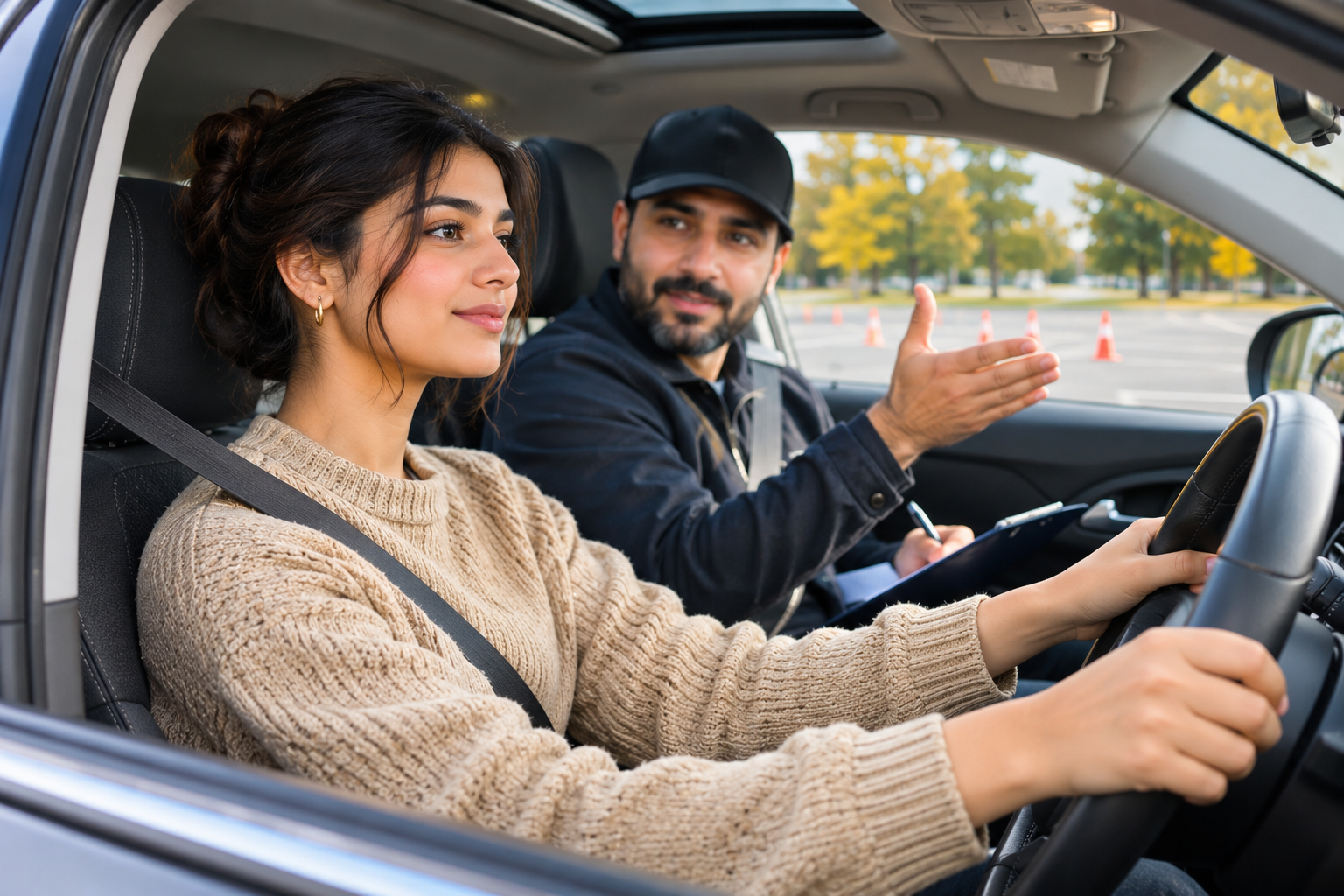
Almost everyone is nervous before their first driving lesson, and almost everyone finds it was less frightening than they expected.
Most of the fear comes from not knowing what is about to happen. So here is what actually happens step by step, including the parts nobody mentions.
The short version: you will not be thrown into traffic. A first lesson usually starts with the car stationary, moves to a quiet area at walking pace, and ends with you having driven a little and understood a lot. Nobody expects you to be good at it.
Before the Lesson
What you must bring
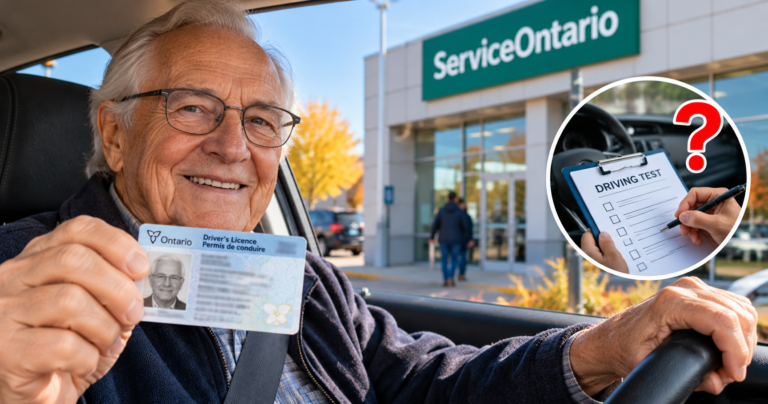
- Your G1 licence. This is not optional — you cannot legally drive without it, and no instructor will take you out without seeing it.
- Glasses or contact lenses, if you need them to drive.
What to wear
- Flat, thin-soled shoes. This matters more than people expect — thick soles and heels make it very hard to feel how much pressure you are putting on the pedals. Trainers are ideal. Boots and sandals are not.
- Comfortable clothes you can move and turn in.
What actually helps
- Sleep. Tired learners find everything harder and get discouraged faster.
- Eat something light beforehand, but not a heavy meal.
- Skip the extra coffee. You will have enough adrenaline.
- Use the bathroom first. A lesson is an awkward time to need one.
You do not need to have studied anything, practised anything, or watched videos beforehand. Showing up is enough. Your instructor expects a complete beginner.
The First Few Minutes
Your instructor will introduce themselves, check your G1, and usually ask a few questions: have you driven at all before, do you have any particular worries, is there anything they should know.
Answer honestly. If you are terrified, say so. If you drove a lawnmower on a farm, say that too. It changes how they plan the lesson, and a good instructor would far rather know.
They will also tell you where you are going — usually somewhere quiet — and typically drive there themselves, so your first time behind the wheel is not in traffic.
The Cockpit Drill
Before the car moves at all, you will set it up around you. This usually feels slower than you expected, and it is the part that makes everything afterwards easier.
| Adjustment | What you are aiming for |
| Seat position | Close enough to press the pedals fully to the floor without stretching |
| Seat height | High enough to see clearly over the wheel and bonnet |
| Head restraint | Roughly level with the top of your head — a safety item, not a cushion |
| Steering wheel | Reachable with a slight bend in your elbows |
| Mirrors | Set so you can see without leaning or moving your head much |
| Seat belt | On, and sitting flat across your shoulder and hips |
Then your hands. The Official MTO Driver’s Handbook puts it plainly: “picture the steering wheel as a clock and place your hands at nine o’clock and three o’clock.” It gives the most control if you need to steer suddenly, and keeps your arms out of the airbag’s way.
Your instructor will also walk you through the controls — indicators, wipers, lights, handbrake or electronic brake, and which pedal is which. There is no shame in checking. Everyone does it on their first day.
Moving for the First Time
This is the moment people dread and then find anticlimactic.
In an automatic you will usually: press the brake, select drive, check your mirrors and blind spot, then ease off the brake and let the car creep forward before touching the accelerator at all.
The first thing most beginners discover is that the car moves on its own, gently, and that the pedals are far more sensitive than they imagined. The second is that stopping smoothly is harder than starting — which is why instructors spend so much of a first lesson on braking.
You will almost certainly brake too hard at least once. So did everyone reading this. It is information, not failure.
What You Will Actually Do
A realistic first lesson, in a quiet car park or on very quiet residential streets:
- Moving off and stopping, several times
- Steering gently at walking pace
- Getting a feel for the accelerator and brake
- Simple left and right turns
- Possibly some basic observation — mirrors, looking where you are going
What You Will Not Do
- Drive in heavy traffic
- Go on a highway — and with a G1 you may not use 400-series highways at all, except when accompanied by an Ontario-certified driving instructor
- Parallel park
- Reverse around corners
- Anything your instructor has not talked you through first
If an instructor does put you into busy traffic in your first session, that is a reasonable thing to question.
About Those Dual Controls
This is the single most reassuring fact about learning with a school, and a lot of nervous learners do not know it.
Your instructor has their own brake pedal. A properly equipped training car has dual controls, so the instructor can stop the car at any moment without touching you or the wheel.
Ontario treats this as a basic standard — the province lists training vehicles “not properly equipped with a dual brake” as one of the warning signs of a driving school to avoid.
Practically, it means the worst realistic outcome of a beginner mistake is that the car stops. That is a very different proposition from practising in a family car with a parent who has no pedal.
How the Lesson Ends
Expect a short conversation at the end: what went well, what to work on, and what the next lesson will cover. Lesson lengths and structures vary between schools, so ask when you book if you want to know exactly.
Ask questions at this point. It is the most useful five minutes of the lesson and most learners waste it being relieved.
If You Cry, Panic or Freeze
This section exists because people search for it, quietly, and find very little written honestly about it.
If you cried during your first driving lesson, you are in far larger company than you think. So is going blank at a junction, forgetting which pedal is which, or getting out of the car convinced you are uniquely bad at this — all of it is ordinary.
- It is adrenaline, not evidence. You have spent an hour concentrating harder than usual while feeling watched. A physical reaction afterwards is ordinary.
- Instructors have seen it before. All of them. It does not change their opinion of you as a learner.
- Say it out loud. “I need a minute” or “I am overwhelmed” is a complete sentence, and a decent instructor will pull over and wait.
- Shorter lessons help. Finishing calmly builds more confidence than enduring an hour of rising panic.
- Name the specific fear. “Driving” cannot be practised. “Pulling out at that junction” can.
One honest caveat: if driving is causing you distress well beyond ordinary nerves, that is worth talking to someone about — your instructor first, and your doctor if it is affecting you outside lessons. Pushing through is not always the right answer, and there is no deadline on learning.
Common First-Lesson Worries
| Worry | The reality |
| “I will crash the car” | The instructor has their own brake, and you will be at walking pace |
| “I will be the worst student they have had” | They taught someone yesterday who had never sat in a driver’s seat |
| “I will forget everything” | You will. That is what lesson two is for |
| “Everyone else finds this easy” | They do not. They are just not talking about it either |
| “I am too old to start” | Adults often learn the rules faster; the practice need is much the same |
After Your First Lesson
- Book the next one before too long. Momentum matters more than the length of any single lesson.
- Write down one thing to work on. One, not five.
- Start noticing driving as a passenger — what the driver does at junctions, when they check mirrors. It is free practice.
- Read a little between lessons. Our beginner’s guide to learning to drive in Ontario sets out the whole path, and what defensive driving actually means covers the observation habits examiners watch for.
Book Your First Lesson
Go Drive Driving School is MTO approved and teaches new drivers one-on-one across Barrie, Innisfil, Bradford, Midhurst, Springwater, Orillia, Alliston, Cookstown and Angus including people who are genuinely nervous about starting. Book your first lesson, see our programs and fees, or contact us at 705-717-0406.
Not sure where you are in the process yet? Start with how Ontario’s graduated licensing system works
FAQs
Do I need my G1 for my first driving lesson?
Yes. You cannot legally drive without it, and your instructor will ask to see it.
Will I drive on the road on my first lesson?
Usually on very quiet streets or in a car park, at low speed. Most instructors drive you to the practice area themselves.
What should I wear to a driving lesson?
Flat, thin-soled shoes so you can feel the pedals, and comfortable clothes you can turn and move in.
How long is a first driving lesson?
It varies between schools, so ask when you book. Many beginners find a shorter first lesson easier than a long one.
Is it normal to be really nervous?
Yes, and it is normal to be emotional afterwards too. It is adrenaline and concentration, not a sign you cannot drive.
Can the instructor stop the car if I make a mistake?
Yes. A properly equipped training car has dual controls, including a brake on the instructor’s side.
What if I have driven a bit already?
Tell your instructor at the start. They will adjust the lesson rather than starting from zero, and they would much rather know.
Do I need to practise before my first lesson?
No. Your instructor expects a complete beginner and will start from the beginning.